

Does Honey Really Help With Coughs? 🍯
Short Answer
Yes, there is moderate evidence that honey can help soothe coughs, particularly in children over 1 year old. Some clinical studies have found honey to be as effective as certain over-the-counter cough suppressants. However, honey should never be given to infants under 12 months due to botulism risk, and it does not treat the underlying cause of a cough.
Key Takeaway
Honey is a safe and relatively effective demulcent for soothing acute coughs in children (over 1 year) and adults, but it is a symptom-reliever, not a cure for underlying infections.

The Claim Explained
For centuries, across numerous cultures worldwide, honey has been used as a traditional home remedy for coughs and sore throats. From hot water with lemon and honey to eating it straight from a spoon, it remains one of the most popular natural interventions for upper respiratory symptoms.
Today, with growing awareness of the side effects and sometimes limited efficacy of over-the-counter (OTC) modern cough syrups, many parents and adults are looking back to honey. Even major health organizations, including the World Health Organization (WHO), have recognized honey as a potential demulcent for coughs in children.
But is this just comforting folklore, or does science support the use of honey as an active cough suppressant? Let's break down the biological and clinical evidence.
What's Actually in Honey?
To understand how honey might work, we must look at its composition:
- Sugars (~80%): Primarily fructose and glucose, giving it high viscosity and sweetness.
- Water (~17%): A very low moisture content that inhibits microbial growth.
- Enzymes: Notably glucose oxidase, which produces small amounts of hydrogen peroxide.
- Antioxidants: Flavonoids, phenolic acids, and trace vitamins that vary heavily based on the floral source.
- Antimicrobial properties: Derived from its high osmolarity (low water activity), acidity (low pH), and hydrogen peroxide.
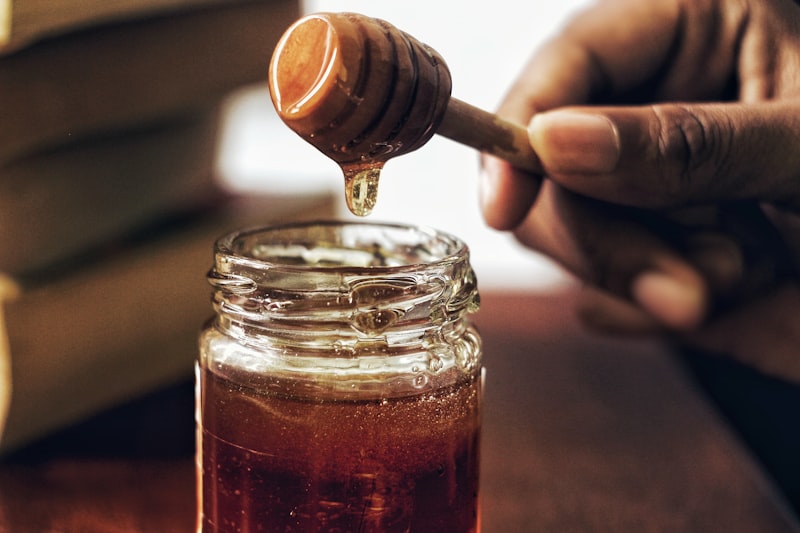
How Honey Might Soothe Coughs
What Happens Inside the Body?
A cough is a protective reflex triggered by the irritation of sensory nerve endings (mechanoreceptors and chemoreceptors) in the respiratory tract. Honey is believed to act on this process in several ways:
The Demulcent Effect
Because of its thick, viscous nature, honey coats the mucosa of the throat. This creates a physical protective layer that shields irritated sensory nerve endings from further stimulation, directly reducing the triggering of the cough reflex.
Sensory Stimulation
The intense sweetness of honey causes salivation and frequent swallowing. It is also theorized that sweet tastes can stimulate endogenous opioid release in the brainstem, specifically interacting with the cough center to suppress coughing.
Localized Antimicrobial Action
While honey won't cure a viral infection, its localized low water activity and hydrogen peroxide production can inhibit some bacterial growth in the throat, potentially reducing secondary irritation.
The Pathway:
Honey Intake → Thick Coating on Throat → Shields Sensory Nerves from Irritation → Fewer Signals to Brainstem → Reduced Cough Reflex
What Does Science Say?
Surprisingly for a home remedy, honey has been the subject of several high-quality studies and reviews:
- Cochrane Reviews: A Cochrane review (the gold standard for evidence-based medicine) found that honey is likely more effective at relieving cough symptoms in children than no treatment, diphenhydramine (an antihistamine), and placebo.
- Oxford University Meta-Analysis (Abuelgasim et al., 2021): This comprehensive review of 14 clinical trials found that honey was superior to usual care for improving symptoms of upper respiratory tract infections, particularly cough frequency and severity.
- Comparative Efficacy: Multiple studies show honey works about as well as dextromethorphan (a common OTC cough suppressant) for acute nighttime coughs in children.
- Limitations of Research: Most clinical trials focus on children with upper respiratory infections. There is significantly less robust data regarding adults, though the biological mechanism (demulcent effect) remains the same. The overall quality of evidence is considered moderate due to the difficulty of creating a true "placebo" for honey.
CRITICAL SAFETY: Honey and Infant Botulism
NEVER give honey of any kind to children under 12 months of age.
Honey can contain the spores of Clostridium botulinum, a type of bacteria. In adults and older children, the mature digestive system (intestinal flora) safely handles these spores, preventing them from growing.
However, infants under 1 year old have immature digestive systems. If they ingest these spores, the bacteria can colonize in their intestines and produce a toxin, leading to Infant Botulism—a rare but potentially fatal condition that causes muscle weakness and breathing problems.
Note: This applies to ALL forms of honey (raw, pasteurized, baked, or commercial). Heat does not reliably destroy botulism spores.
Myth vs. Reality
Honey cures coughs.
Honey is a symptom reliever. It soothes the throat and reduces the urge to cough, but it does not treat the underlying viral or bacterial infection causing the cough.
Raw honey is a medicine.
While it has demulcent properties and some antimicrobial activity, honey is a food product and home remedy, not a regulated pharmaceutical drug.
Honey kills all the bacteria in your throat.
Honey's antimicrobial effects are local and temporary. It cannot eradicate a systemic infection or cure strep throat.
Manuka honey is medically superior for coughs.
While Manuka has higher specific antibacterial properties, most clinical trials showing cough relief used regular, standard honey. The primary benefit is the thick coating effect.
Honey is safe for all ages.
FALSE. Honey should NEVER be given to infants under 12 months due to the severe risk of infant botulism.
Honey cures strep throat.
Strep throat is a bacterial infection (Streptococcus pyogenes) that requires medical diagnosis and prescription antibiotics. Honey can soothe the pain, but cannot cure the infection.
A spoonful of honey works like prescription cough medicine.
Studies show it is comparable to OTC medicines like dextromethorphan, but stronger prescription antitussives work differently (often centrally in the brain).
Honey in boiling water is more effective.
Boiling water actually degrades many of honey's natural enzymes and antioxidants. Warm (not boiling) water is best if you want to preserve its natural compounds.
Evidence-Based Benefits
🟢 Reduces night coughs: Moderate evidence shows it reduces cough frequency and severity in children at night.
🟢 Soothes throat irritation: Effectively coats sensory nerves in the throat.
🟡 Comparable to some OTCs: Studies show it often performs equally well or slightly better than dextromethorphan.
🟠 Better sleep: By reducing coughs, it may secondarily improve sleep quality for patients and parents.
What Honey CANNOT Do
Cannot cure a viral infection (like a cold or the flu).
Cannot cure bacterial infections (like strep throat) or replace antibiotics.
Cannot clear mucus from the lungs or treat lower respiratory infections (like pneumonia).
Cannot treat asthma or chronic coughs related to acid reflux.
Who May Need Caution?
Infants (Under 12 months): Strict contraindication due to botulism risk.
Diabetics: Honey is primarily composed of simple sugars (fructose and glucose) and will raise blood sugar levels. It should be factored into carbohydrate counts.
People with bee or pollen allergies: While severe allergic reactions to honey are rare, individuals with severe pollen or bee venom allergies should exercise caution or consult an allergist.
When to See a Doctor
- • A cough that lasts longer than 3 weeks
- • Coughing up thick greenish-yellow phlegm or blood
- • Difficulty breathing or shortness of breath
- • High fever or chills
- • Wheezing or chest pain
- • Unintended weight loss or night sweats
Practical Daily Tips
- Dosage: For children over 1 year, 0.5 to 1 teaspoon (2.5 to 5 mL) of honey as needed.
- Delivery: Take it straight off a spoon, or mix it into warm (not boiling) herbal tea or warm water with lemon.
- Timing: Give it 30 minutes before bedtime to help suppress nighttime coughs.
- Dental Care: Since honey is pure sugar, ensure teeth are brushed afterward, especially before bedtime, to prevent cavities.
Frequently Asked Questions
Is raw honey better than processed honey for a cough?
Can I give honey to a 6-month-old?
How much honey should I take for a cough?
Does adding lemon to honey make it work better?
Can a diabetic use honey for a cough?
Will honey cure my chest infection?
Does honey work for a dry cough or a wet cough?
What happens if I put honey in boiling water?
Can honey cause allergies?
Why did the WHO recommend honey?
Evidence & Sources
- Oduwole O, et al. (2018). "Honey for acute cough in children." Cochrane Database of Systematic Reviews.
- Abuelgasim H, et al. (2021). "Effectiveness of honey for symptomatic relief in upper respiratory tract infections: a systematic review and meta-analysis." BMJ Evidence-Based Medicine.
- World Health Organization (WHO). Guidelines regarding upper respiratory tract infections and cough remedies for children.
- Centers for Disease Control and Prevention (CDC). "Infant Botulism: Prevention and Facts."
- National Institutes of Health (NIH) / PubMed. Various clinical trials comparing honey efficacy to dextromethorphan and diphenhydramine.